
By Nathan Kiwere
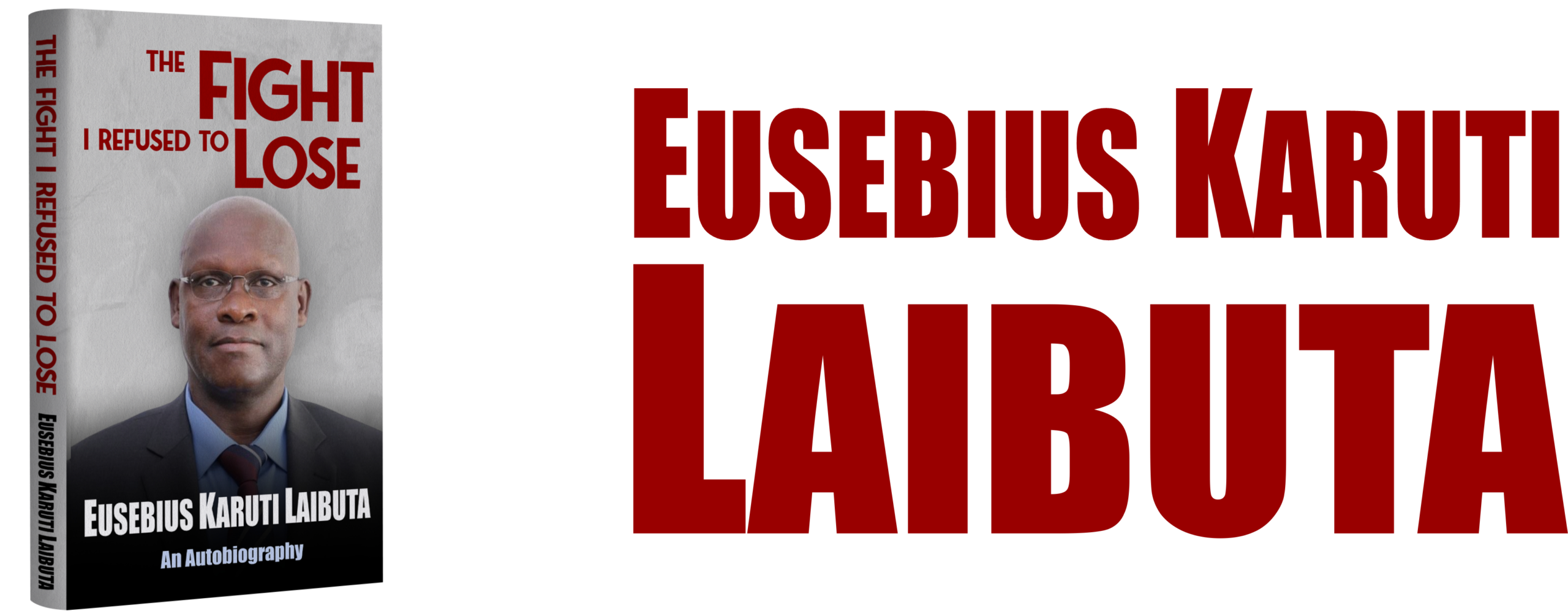
Randy Pausch once observed that brick walls are not designed to keep us out, but to test how badly we want what lies on the other side. In many lives, these walls appear as injustice, poverty, institutional bias, or sheer bad luck. In a few lives, however, brick walls become classrooms—places where character is taught, resilience is sharpened, and purpose is clarified. The life and career of Eusebius Karuti Laibuta belong firmly in that second category. His journey through the ranks of Kenya’s police service is not merely a story of promotion and titles; it is a testimony to what happens when resolve repeatedly meets resistance and refuses to retreat.
In East Africa, the police uniform is often worn in conditions few outsiders fully understand. It is not uncommon for an officer to begin his career with minimal resources, long postings far from home, and a system that rarely rewards effort immediately. For many young recruits, the first brick wall appears early: low pay, spartan living conditions, and the sobering realization that idealism alone cannot sustain a career. For Laibuta, these early walls did not signal an exit. They marked an initiation. Like a farmer who understands that hard soil must be broken before planting, he learned early that endurance was not optional; it was foundational.
One might compare his journey to that of a long-distance runner on an unmarked road. The destination is known only in the abstract—“the top echelons”—but the terrain is unpredictable. Some stretches are smooth, others riddled with stones and sudden inclines. Advancement in disciplined services such as the police is rarely linear. Merit competes with politics, integrity contends with compromise, and patience is tested by delays that feel personal even when they are systemic. In such moments, many capable officers quietly stall or step aside. Laibuta pressed on, choosing consistency over complaint, preparation over protest.
There were brick walls that came not from external hardship but from human skepticism. In hierarchical institutions, ambition is often misunderstood, and excellence can attract suspicion as easily as it attracts recognition. To rise is sometimes to be questioned: Why him? Why now? These unspoken questions form invisible walls that can be harder to climb than overt obstacles. Laibuta’s response was neither confrontation nor withdrawal. It was quiet competence. Like water that reshapes stone not by force but by persistence, his work spoke where words would have failed.
The African proverb that says, “A smooth sea never made a skilled sailor,” finds vivid expression in his career. Operational challenges, difficult postings, and moments of national tension tested not only his professional skill but his moral compass. In policing, every decision carries weight, often affecting lives, communities, and public trust. The easy path is rarely the right one, and the right one is rarely easy. Each ethical stand taken, each pressure resisted, added another layer to the wall before him. Yet, as Pausch suggests, these walls served a purpose: they filtered out those unwilling to pay the price of principled leadership.
As a Ugandan observing this Kenyan journey, I recognize parallels close to home. In our region, public service often unfolds under the gaze of public skepticism. Citizens demand results, institutions demand loyalty, and personal conscience demands integrity. Navigating these competing expectations requires a kind of inner architecture—values strong enough to bear weight. Laibuta’s ascent demonstrates that leadership in uniform is not conferred by rank alone, but by credibility earned over time. His walls were not merely professional hurdles; they were moral examinations.
Perhaps the most telling analogy is that of the blacksmith’s forge. Steel does not become strong by avoiding fire; it is strengthened by it. Heat, pressure, and repeated strikes give it form and durability. Laibuta’s career was forged in such conditions. Adversity did not soften him into resignation; it tempered him into reliability. By the time he reached senior command, he carried not only authority, but the quiet confidence of someone who had been tested repeatedly and found steady.
In reflecting on his life, it becomes clear that brick walls also serve another function: they reveal intention. Many people desire success, but few desire the discipline, patience, and sacrifice that success demands. The walls Laibuta encountered exposed the depth of his commitment—not to personal glory, but to service. They separated casual aspiration from deliberate purpose. In climbing them, he modeled a lesson that extends beyond policing and beyond Kenya: that meaningful achievement is rarely accidental.
This biography, therefore, is not simply a record of a distinguished police career. It is an invitation to younger generations—officers, civil servants, and citizens alike—to rethink adversity. Brick walls will appear, sometimes built by circumstance, sometimes by people, sometimes by systems slow to change. The question is not whether they exist, but how one responds to them. Do they become excuses, or do they become evidence of desire?
Eusebius Karuti Laibuta’s life answers that question with clarity. He wanted his calling badly enough to endure the walls, climb them, and, in doing so, help strengthen the institution he served. His story affirms Randy Pausch’s insight: that brick walls are not barriers to destiny, but tests of it. And for those who persevere with integrity, they do not block the way—they define it.
Leave a Reply